Digital Marketing
1. Defining Digital Marketing and its Foundational Pillars (Expanded Introduction)
The landscape of commerce has undergone a seismic shift, fundamentally redefining how businesses connect with their audiences. We live in an era where the first touchpoint, the moment of discovery, and the final purchase decision increasingly happen online. This monumental change is the domain of Digital Marketing—a comprehensive discipline that encompasses all marketing efforts utilizing an electronic device or the internet. It is far more than just posting on social media; it is a strategic ecosystem designed for unparalleled reach and measurable results.
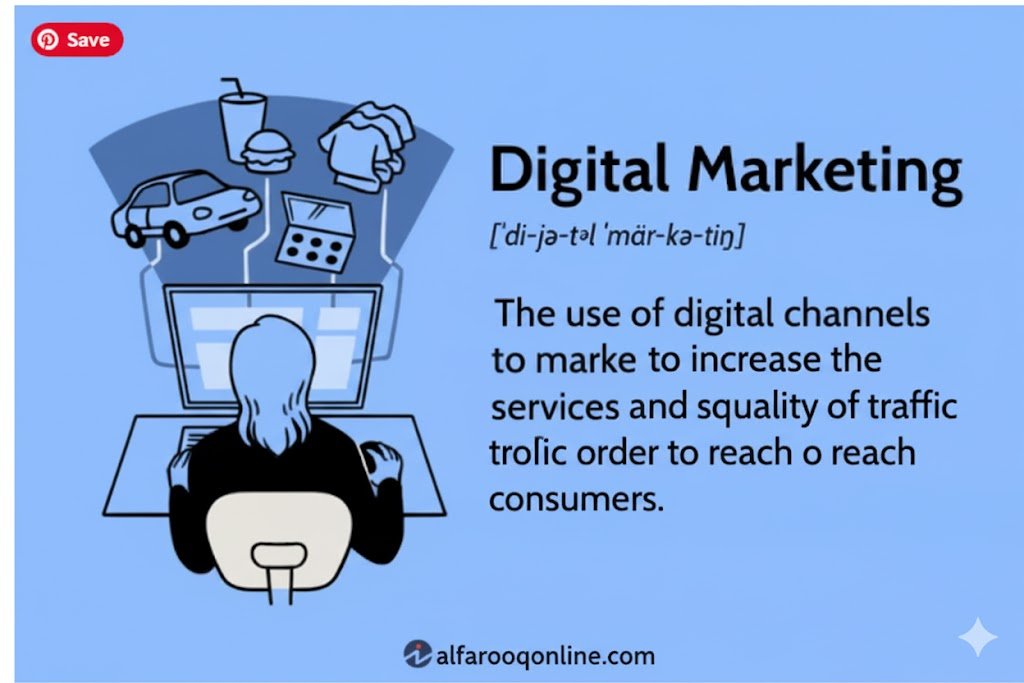
To truly understand this field, we must first address the foundational question: What is digital marketing? Simply put, digital marketing is the practice of promoting products and services through digital channels such as Search Engine Optimization (SEO), Pay-Per-Click (PPC) advertising, Content Marketing, Social Media Marketing (SMM), and Email Marketing. Unlike its traditional counterpart—where the message is static and the audience is broad—digital marketing is dynamic, interactive, and highly targeted. This difference is starkly evident when considering the Difference between digital marketing and traditional marketing; digital methods offer precision, speed, and the ability to track every single user interaction.
This comprehensive guide serves as your ultimate resource for navigating the complexities of the digital marketing world in 2025 and beyond. Our objective is not only to explain digital marketing in simple words but to provide a complete strategic blueprint. We will dissect the Key components of a digital marketing strategy, demonstrating how each piece—from keyword research to final conversion—must work in synergy to achieve business objectives. This article is vital for professionals seeking to understand how digital marketing works for small business scaling, and for those exploring whether digital marketing is a good career choice for their future.
1.1. Traditional vs. Digital Marketing: A Strategic Comparison
Understanding the difference is key to modern success. This comparison directly addresses the Difference between digital marketing and traditional marketing.
| Feature | Traditional Marketing | Digital Marketing |
| Medium | Print (Newspapers), Radio, TV | Internet, Social Media, Email, Mobile Apps |
| Measurement | Difficult and estimated | Highly Accurate (Clicks, Conversions, ROI) |
| Interaction | One-way communication | Two-way, real-time engagement and feedback |
1.2. The Core Components of a Successful Strategy
A robust strategy relies on integrating several key digital components. These are the main engines that drive success, covering the Key components of a digital marketing strategy.
- Content Marketing: The hub for creating valuable content.
- SEO (Search Engine Optimization): Ensuring discoverability.
- PPC (Pay-Per-Click): Driving immediate traffic.
- Social Media Marketing (SMM): Building community.
- Email Marketing: Nurturing leads.
2. Why Digital Marketing is Essential for Business Growth
In today’s landscape, nearly all purchasing decisions start online. The primary reason for adopting this discipline is simple: How digital marketing works for small businesses and large enterprises to scale their reach effectively.
2.1. The Tangible Benefits for Modern Enterprises
This section addresses the Benefits of learning digital marketing and the role of digital marketing in modern business. Furthermore, professionals often ask: Is digital marketing a good career choice? The answer is yes, due to its measurable ROI and scalability.
- Hyper-Targeting: Marketers can target users based on minute details, a core aspect of What is B2B digital marketing.
- Detailed Analytics: This supports how to measure customer lifetime value (CLV) accurately.
- Cost-Effectiveness: Making it the Best way to learn SEO and SEM for free by practicing on personal projects.
3. Mastering the Digital Marketing Channel Pillars
3.1. Search Engine Optimization (SEO): The Foundation of Organic Traffic
SEO is the cornerstone of long-term traffic, requiring constant attention to ranking factors.
3.1.1. Technical, On-Page, and Off-Page SEO Deep Dive
- On-Page SEO: Focuses on optimization within the page. This includes perfecting how to write a meta description that converts and ensuring high-quality answers to user intent.
- Technical SEO: This pillar involves site structure and speed. Critical steps involve the Technical SEO audit for the WordPress site and addressing how to prepare for Google’s core web vitals update. This also involves Voice search optimization tips for 2025.
- Off-Page SEO: Primarily revolves around authority building. Link-building techniques for beginners should be prioritized over risky black-hat methods.
3.1.2. Content Strategy and Keyword Research
An effective content strategy uses models like the pillar content and cluster content models. Successful execution begins with asking how to do keyword research for a new website, moving away from competitive short-tail keywords. The output is the Best content writing strategy for SEO that is both engaging and searchable.
3.2. Social Media Marketing (SMM): Connection and Community
SMM is key to engaging potential and existing customers across diverse platforms.
3.2.1. Platform-Specific Strategies and Growth
The strategy shifts dramatically based on the platform. Key focuses include how to increase Instagram engagement organically for B2C and refining LinkedIn marketing strategies for B2B lead generation. Marketers frequently compare Google Ads vs Facebook Ads for lead generation to decide where to invest.
- Engagement: The success of the Social media content ideas for the travel business relies heavily on visual appeal and consistent posting.
- Planning: To maintain consistency, utilize a Creating a social media content calendar template.
3.3. Paid Advertising (PPC): Driving Immediate, Measurable Results
PPC provides fast results and scalable reach, making it vital to PPC advertising budget planning for startups.
3.3.1. Strategic Ad Campaign Execution
Execution requires precise targeting and budget management. A common task is defining how to set up a Google search ad campaign effectively. Marketers often debate Google Ads vs Facebook Ads for small businesses based on their product type.
- Retargeting: What is retargeting in digital marketing, and how it works involves showing ads to warm audiences who have already shown interest.
- Optimization: Continuous testing is required to lower costs, focusing on how to lower CPC in Google Ads and performing A/B testing of ad copy best practices. You must also understand the difference between CPM and CPC.
3.4. Email Marketing and Automation: Nurturing Leads
Email remains a highly effective channel for conversion. Businesses rely on the Best email marketing software for small businesses to manage lists efficiently.
3.4.1. Building and Optimizing Email Campaigns
The first step is figuring out how to build an email list from scratch. Optimization relies heavily on Effective email subject lines for high open rates to maximize delivery and engagement.
- Automation: What is marketing automation, and its benefits allow marketers to send personalized sequences based on user behavior.
- Lead Generation: Focus on Tips for generating B2B leads online through gated content and webinars.
4. Strategy, Measurement, and Career Path
4.1. The 5-Step Strategy Planning Process
The overall strategy must be systematic. The five steps ensure a robust plan:
- Goal Setting: Defining objectives using the SMART framework.
- Audience Research: Developing detailed Digital marketing persona examples.
- Channel Selection: Determining which digital marketing skills have high demand and prioritizing channels accordingly.
- Budget Allocation: Planning PPC advertising budget for startups.
- Tracking & Optimization: Continuously improving. How to improve website user experience (UX) for conversions.
4.2. Education and Career Development
For those starting, questions are common: What is the qualification required for digital marketing, and how long does it take to learn digital marketing? Success hinges on practical experience.
- Learning: Many begin with the Best free digital marketing courses online and work towards a Digital marketing certification value and cost.
- Career: The career path involves specializing; for instance, choosing between a specialist role and a generalist role (e.g., Who is a digital marketing specialist). For job seekers, preparation involves studying the Top interview questions for digital marketing jobs.
4.3. Top 5 In-Demand Digital Marketing Skills for 2025
The key skills needed for the Digital marketing scope and salary in India include:
- AI and Automation Literacy: The ability to leverage tools for efficiency.
- Data Analytics: Proficiency in Google Analytics certification for digital marketing.
- CRO/Testing: Mastering What is conversion rate optimization (CRO) in digital marketing?
- Technical SEO
- Soft Skills (e.g., communication, collaboration).
5. Future Trends: AI, Privacy, and Advanced Concepts
5.1. The Role of Artificial Intelligence (AI)
AI is the defining trend. The future of digital marketing with AI is not about job replacement, but skill augmentation. Marketers must learn how to use ChatGPT for digital marketing tasks for efficiency in content creation and research.
5.2. Navigating the Cookieless Future
The privacy shift requires new models for targeting. Understanding zero-click searches and SEO is critical as Google tries to answer questions directly. The core issue is what is cookieless future is and its impact on advertising, necessitating a pivot toward first-party data.
5.3. Advanced Strategy and Growth
Advanced marketers focus on concepts like What is growth hacking in digital marketing—creative, low-cost strategies to maximize growth. They also deploy. What is programmatic advertising, and why does it matter for efficient ad buying?
Conclusion: Your Roadmap to Digital Marketing Mastery
We have journeyed through the dynamic and multifaceted landscape of digital marketing, dissecting the primary channels, strategic frameworks, and future-forward trends. This guide has established that success in the modern business world is entirely predicated on a robust, data-driven, and integrated digital presence. We began by providing a concise definition and exploring the clear advantages over outdated traditional methods, proving that the scalability and precise targeting capabilities of digital channels make them indispensable.
Throughout the technical sections, we emphasized the long-term imperative of SEO (Search Engine Optimization), focusing on the crucial balance between technical soundness, quality content, and ethical link-building techniques for beginners. We detailed the strategic shift necessary to move beyond simple vanity metrics on social media, emphasizing the use of LinkedIn marketing strategies for B2B lead generation and viral techniques for B2C, ensuring every channel contributes to the bottom line. Furthermore, we provided concrete methods for strategic investment, differentiating between platforms in questions like Google Ads vs Facebook Ads for small businesses and providing practical steps on how to lower CPC in Google Ads through meticulous optimization.
The core message remains clear: the mastery of digital marketing is a continuous process, not a destination. To thrive in the coming years, professionals must embrace the major shifts discussed in the final section. The rapid influence of the future of digital marketing with AI necessitates integrating tools like ChatGPT not just for content creation, but for data analysis and campaign optimization. Moreover, the industry-wide move toward privacy, driven by what is cookieless future is and its impact on advertising, requires a fundamental pivot toward first-party data strategies and building genuine customer trust.
For those considering entering or advancing in this field, Digital marketing remains highly promising, provided you cultivate the Top 5 In-Demand Digital Marketing Skills for 2025, which prioritize data analytics and technical expertise over simple creative execution.
Your ultimate roadmap to digital marketing mastery involves applying the 5-Step Strategy Planning Process outlined here, using precise metrics like how to measure customer lifetime value (CLV) to guide investment, and perpetually challenging the status quo through what is conversion rate optimization (CRO) in digital marketing. Do not let this knowledge remain theoretical. Take the actionable advice provided in the checklists and strategic comparisons and implement them today.
Your Next Step: Now that you have the complete strategic blueprint, choose one channel—SEO, SMM, or PPC—and begin auditing your current efforts immediately using the checklists provided in Section 3. Are you ready to dive into the technical audit, or would you like to explore how to become a freelance digital marketer based on these skills?

Digital marketing agency offering expert SEO, powerful PPC, social media management, and web design. Grow your business faster.
Services Links
Offices Address
12th Floor, Askari Corporate Tower, 75, Block D1 Gulberg III, Lahore, Punjab
Mouse Polling Rate Tester
Move your mouse inside the box below to measure your mouse polling rate (Hz).